Every time a purchase is approved in just a few seconds, there is a technological infrastructure behind it capable of connecting multiple players, interpreting information, applying business rules, and processing large volumes of transactions securely and continuously.
At the center of this dynamic is the payment processor, one of the key components of the payments ecosystem.
What does a payment processor do?
Far from being just a transactional channel, the processor is the platform that enables issuers, acquirers, aggregators, card networks, and merchants to interact with each other in real time.
Its role is mainly based on three key capabilities:
- Connectivity and translation: connects different players and transforms complex messaging, including standards such as ISO, so that different systems can communicate effectively.
- Orchestration and routing: determines where each transaction should be sent according to business rules, products, card networks, channels, or specific configurations.
- Business rule execution: evaluates parameters such as balances, limits, risk, fraud prevention, fees, or product characteristics before determining the outcome of a transaction.
All of this happens in milliseconds.
Not all processors play the same role
Depending on the position an organization holds within the payments ecosystem, there are different processing models.
An issuer processor manages transactions associated with cards and products issued by a financial institution.
An acquirer processor focuses on transactions originated by merchants and their connection with card networks and other participants in the ecosystem.
There are also platforms designed for aggregators and organizations providing third-party processing services, where the ability to manage multiple configurations, participants, and high transaction volumes becomes especially important.
Why is processing technology strategic?
Choosing a processing core is not just a technology decision.
It also determines the level of autonomy an organization has to launch new products, introduce new integrations, modify business rules, and evolve its operating model.
That is why a modern processing platform must provide scalability, modularity, flexibility, and technological independence.
As the business grows, so does the need for technology that can evolve without requiring the entire existing architecture to be replaced.
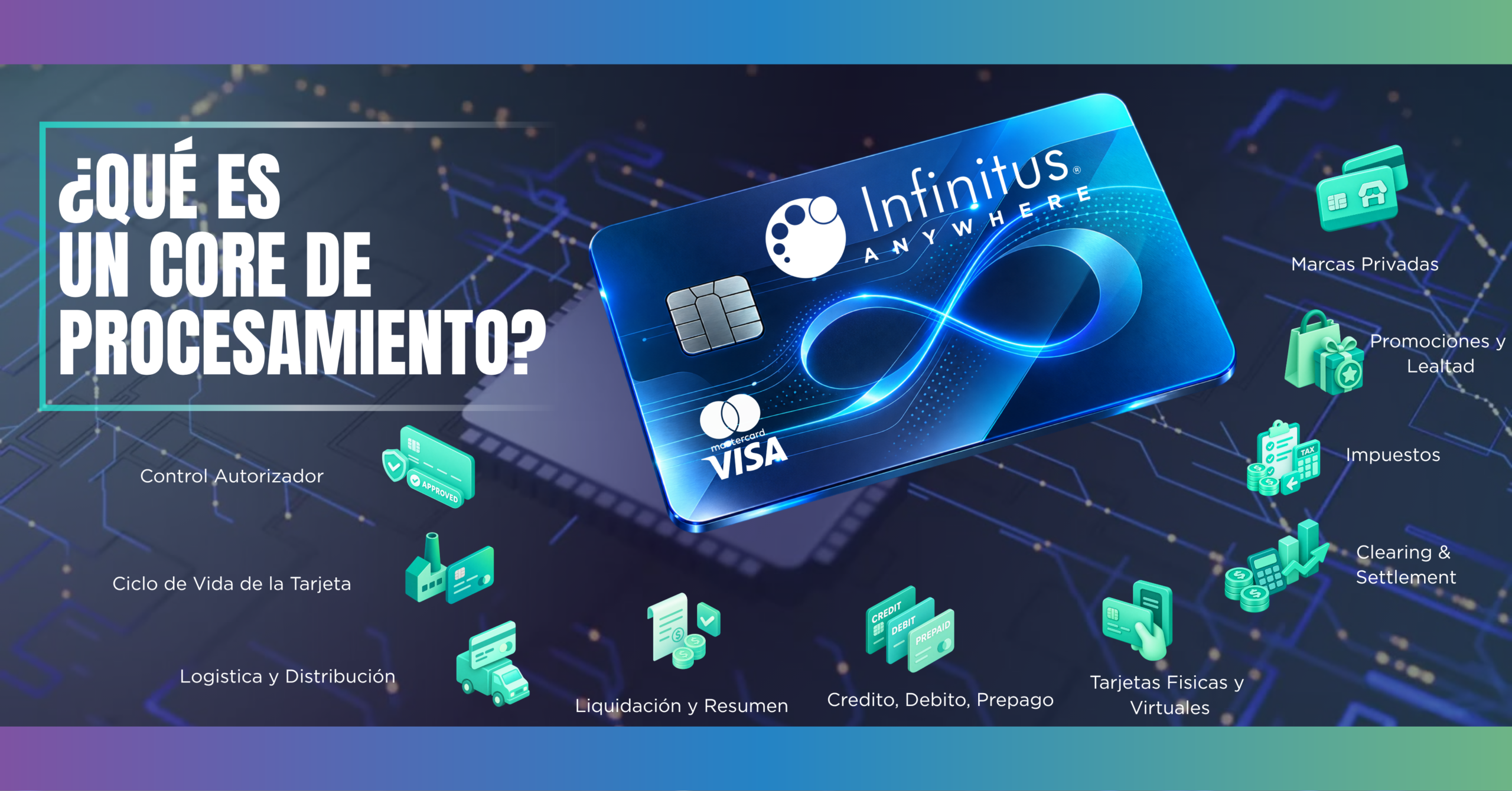
Infinitus Anywhere: an end-to-end Processing Core
At Team Quality, we develop technology to support banks, fintechs, acquirers, aggregators, and other players across the payments ecosystem.
Infinitus Anywhere is our modular, end-to-end Processing Core, designed to support different business models and provide capabilities for issuing, acquiring, aggregation, and third-party processing.
Complementing these capabilities, Orquesta provides connectivity, message transformation, and transaction routing, facilitating integration between platforms, networks, card brands, and third-party services.
The goal is to provide an architecture that enables each organization to operate with greater control, flexibility, and autonomy.
The processor as the core of the payments ecosystem
Behind every approved transaction there is an infrastructure that must operate continuously, securely, and almost instantly.
Understanding what a payment processor is means understanding one of the most important technology components across the entire payments value chain.
In an increasingly connected and dynamic ecosystem, having a processing platform designed to evolve can become a key business differentiator.
👉 Learn more about Infinitus Anywhere and Team Quality’s payment processing solutions.